Table of Content
The Uniform Plumbing Code Committee has developed a method of sizing house drains in terms of fixture units. One fixture unit equals approximately 7½ gallons of water per minute. This is the surge flow rate of water discharged from a wash basin in one minute.
Cast iron is rigid, dark gray piping that was often used for sewer and other drainage purposes. It is still found in many homes and is used today in some commercial and high-rise building applications. Cast iron is expensive but durable with good longevity. It's viable until the point that it rusts completely through.
How Does Fresh Water Flow to Fixtures Like Sinks and Showers?
It’s important to make sure plumbing vents on your roof are undamaged and free of clogs or blockages. At ground level, or below if there is a basement, the stack makes a near-45-degree turn to become the horizontal main sewer drain. It slopes away from the house and enters a public sewer line or private septic system. Branch drains lead to a larger vertical pipe called a stack. This is possibly the most important piece of plumbing in your home. This diagram shows how the plumbing system connects with your bathroom fixtures .
It is made of an aluminum tube laminated to interior and exterior layers of plastic. Kitec provides a composite piping system for a wide range of applications, often beyond the scope of metal or plastic alone. Unlike copper and steel materials, Kitec is noncorroding and resists most acids, salt solutions, alkalis, fats, and oils. The size of basement mains and risers depends on the number of fixtures supplied. However, a ¾-inch pipe is usually the minimum size used. This allows for deposits on the pipe due to hardness in the water and will usually give satisfactory volume and pressure.
Cold Water Supply Vs. Hot Water Supply
If you need to conduct repairs or there is an emergency, you can activate the shutoff valve to cut off the flow of water from the main pipe to your home. This plumbing system brings fresh water to your home using pipes connected either to a city water supply or your own water well. This system brings water to your sink, shower, refrigerator, etc.

The valve incorporated in the corporation stop permits the pressure to be maintained in the main while the service to the building is completed. Example of a common P-trap found under most kitchen and bathroom sinks. Your home’s plumbing system affects everything within your house. It keeps your family moving and comfortable throughout the years. It also can cause larger issues like structural damage or flooding if left unmaintained.
$250 Gift Card with New Tankless Water Heaters
Some automatic dishwashers require higher temperature water, though many of these have a water heater within them that boosts the temperature another 20 degrees F. Shutoff Valves-The main valve controls your entire potable water supply as well as other valves throughout your home through individual fixtures. During installations, maintenance, or repairs, you or a technician will turn these valves off. Shutoff valves completely block the flow of water so that you can work on pipes without soaking the area. Cold water flows into your home or building through the service line, which then distributes hot or cold water to your fixtures.
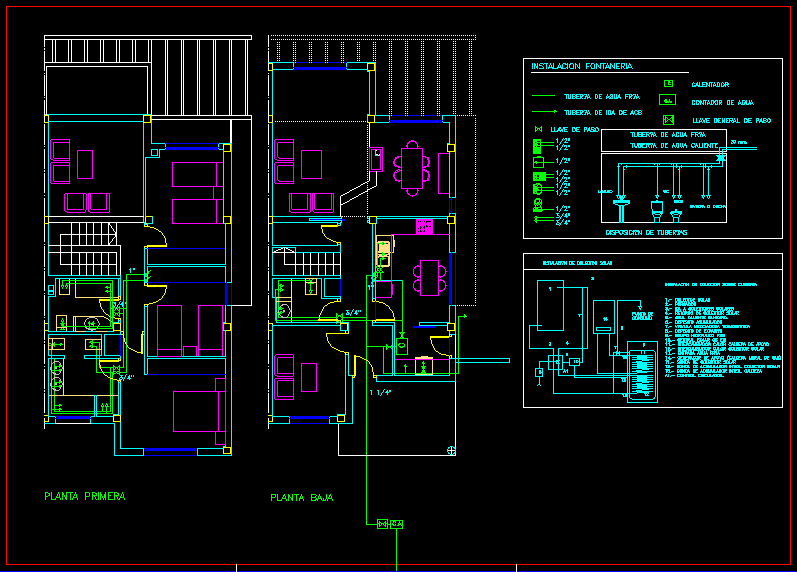
The further away from your toilet or sink, the larger wastewater pipes become. This allows for waste to be disposed of from various parts of your home or business at once – without pipe blockages. The angle and flow of these pipes are also essential for keeping your waste pipes clear of build up. Your plumbing system is made up of many pipes, valves, and faucets that work together to keep water flowing in and out of your home or commercial building.
In plumbing jargon, any bridge between the supply and drainage systems is a fixture. With a solid foundation of knowledge, you can take care of easy to fix plumbing issues while knowing when you should call a professional. You are much less likely to fall prey to a plumber that overcharges you or does work that isn’t required when you have a good understanding of plumbing systems. One way to tell if you have a leak without noticing it with the naked eye is to look at your water meter and reported usage. If your reported usage is considerably higher than what you may be used to, a leak may be to blame. You may also spot leaks easily through damp patches, strange or persistent noises, the appearance of mold, or a general loss of water pressure.

Considering the health risks posed by these molds, that’s a saddening fact. Calling in the plumbers when there’s a problem is calling in the plumbers too late. Schedule maintenance runs where a plumber inspects the state of your plumbing. Another trick is to ask for suggestions from a professional when buying plumbing equipment.
Evidently, leaks are most harmful in the water supply system. Due to the sensitivity of the system, its problems are best handled by professionals. The water supply system performs optimally when pressure is high. If the problem lies within the lateral drains or sewer then your local water company is responsible for fixing this. No one likes dealing with a blocked drain but sometimes it can be a bit unclear as to who, exactly, should be dealing with it. A general rule of thumb is, if it’s only your property (whether that’s in the house or not) then it’s your job to get it sorted.
If you are shutoff “short,” as many older homes are, shut down the water supply at the main. All the pipe systems fall into one of the two main categories , regardless of the number of kitchens or bathrooms in a home. The drains should be in close proximity to the vent systems, as they need to be close .


No comments:
Post a Comment